I seek to create order from the chaos of complex information. Join me at the Daily PlanIt to gain insights, inspiration, and information to increase skills for a better life. I unlock the power of teaching reading with phonics in the pursuit of literacy at www.phonicspow.com. In my spare time I explore books and movies, often choosing titles available on both screen and page.
Reading 20 minutes a day has been shown by research to have many benefits. Students who read 20 minutes a day from kindergarten through 6th grade are likely to score in the 90th percentile on standardized tests. Basically, reading makes you a smartie!
Below is a collection of great options for reading. Check your local library or a bookstore for books to target specific phonics skills, and explore the links below for books you can access anytime! Besides books and ebooks, your library may provide online access to resources like Bookflix from Scholastic – check with them.
This Symbaloo collection has links to many websites that provide books online. Some even include audio and/or video!
BEGINNING READERS
Decodable books contain only phonetic code that has been learned. Practice with words and sentences from Stickyball.net. Progressive Phonics has books that target phonics patterns that can be read online or printed. Reading Universe and Freereading.net also have decodable passages.
Emergent readers contain pictures for support and repeating text. shala-books provides emergent and transitional readers with audio. Beginning reads from textproject.org contain many color pictures.
Classic Ebooks: Bygosh.com has ebooks for children, and Project Gutenberg has a children’s bookshelf with picture books and children’s literature. More at the Library of Congress website, Read.gov. Loyalbooks.com has free classic ebooks and audiobooks, and free classic ebooks may be found at Manybooks.net and Planetebook.
3. Learn phonics patterns in a sensible sequence as the student is ready. Try the phonics presentations at ReadingBear.org and watch fun videos that cover many phonics patterns with Kids vs Phonics from RedCatReading.
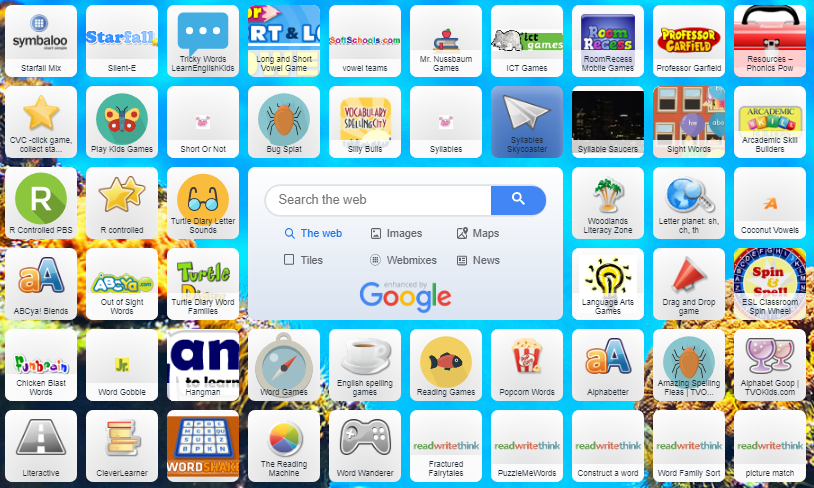
5. Play games that encourage literacy. Hands on games include traditional games like Boggle and Bananagrams, as well as many free printable games that can be found through links on specific phonics skills. Free online games are also available at this Symbaloo. Some online games require flash, which is no longer supported after 12/31/2020. Learn more at The End of Flash.
6. Read books to practice the patterns. The books from Progressive Phonics are free, fun, and practice the phonics patterns. They can be printed or read online.
7. Learn sight words. Many high frequency words are not decodable with phonics guidelines.
8. Encourage reading 20 minutes a day. Children who do this from Kindergarten through 6th grade score 90% better than their peers on tests. Check out more Benefits of reading.
9. Use your library. Attend storytimes, participate in summer reading programs, check out books & online resources. Choose fun books at the right level.
Credits: Some artwork copyrighted by Mark A Hicks, illustrator, www.MARKiX.net. Used with permission. Sources for other graphics at Pinterest. Pattern charts from boostforreaders
The sequence followed by different methods of teaching reading can vary. The Phonics Pow Toolkit is designed to help teachers teach, and students learn with a sensible sequence that builds on skills as they are learned. It is organized in five sections, with most sections having three parts (except the vowel pattern section, which has six). Color coding often provides clues, like the color RED (a CVC word with a short vowel) for the SOUND OUT WORDS section. As much as possible, one syllable words that include only patterns that have been learned are used until the final section. Strategies provide clues but there are many exceptions to learn.
Closed syllables often have a short vowel (with some exceptions). Open syllables have a long vowel sound, and are most often found in words with more than one syllable. However, there are some one syllable words that are open, like: he, me, we, no, go, and so. These are sight words that are frequently seen in written text, so introducing open and closed syllables with one syllable words is a good plan.
Blends are introduced next, with words that have a short vowel.
Consonant patterns are placed together in one section for convenience. Digraphs are a pair of letters that represent one sound. Consonant digraphs make new sounds, and may be introduced with words that have a short vowel at the end of the SOUND OUT WORDS section. Many words with consonant digraphs have advanced vowel patterns that have not been introduced yet, so those are covered as patterns are learned.
The schwa sound is usually a quick and weak “uh” that can be made by any vowel. It is often found in words with more than one syllable. However, there are a few one syllable words with the schwa sound like: of, from, and was. At the end of the silent e section, more is learned with words like “love” and “gloves,” which make the schwa sound instead of being long. The idea of schwa is introduced as a way that vowels can vary.
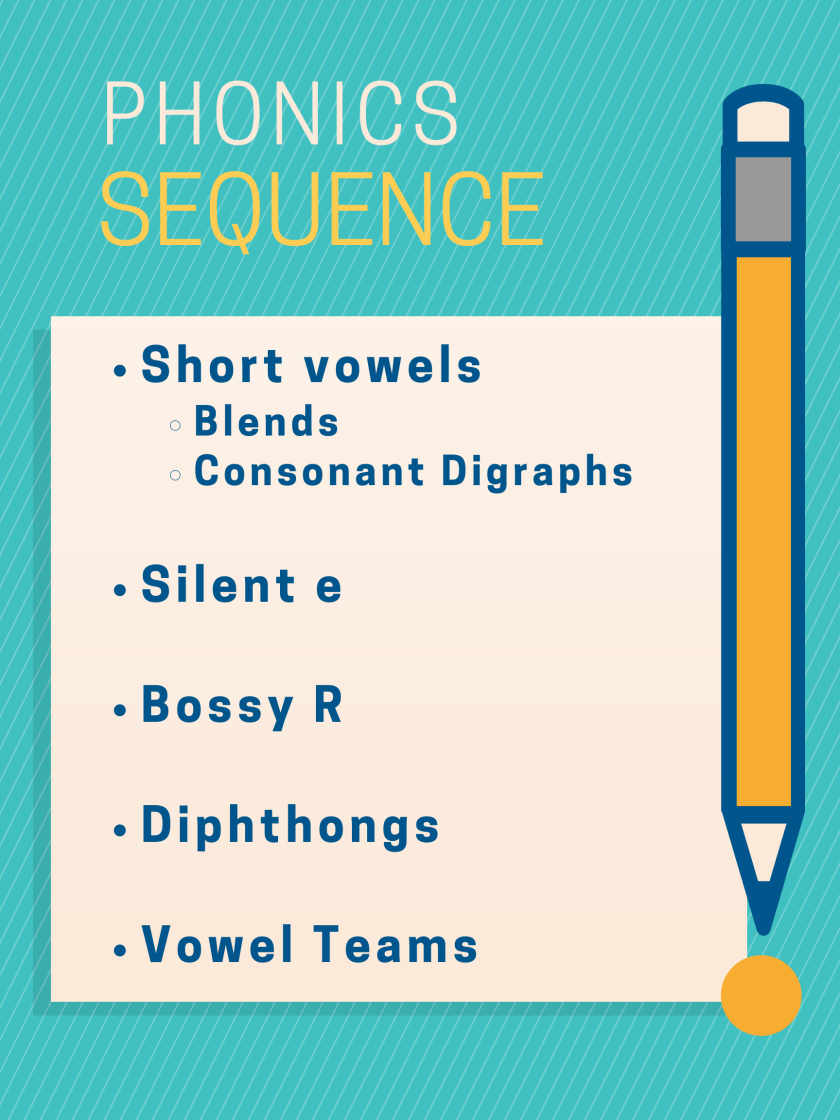
Learning Vowel Patterns begins with Silent e, then Bossy R, followed by Diphthongs and Vowel Teams. Vowel digraphs or combinations are separated into those that often make a long vowel sound (vowel teams) and those that make mostly new sounds (diphthongs). When diphthongs are introduced first, many of the remaining combinations make a long vowel sound. However, this is not always reliable, and there are many exceptions to learn about, so they are the last vowel patterns to learn. The final section includes Consonant-le syllables and more work with multi-syllable words.
Short vowel variations – introduce Flossy words, a can say ŏ, Consonant Digraphs (two letters make one sound): -ck = /k/ after short vowels, and others with short vowels. Schwa in one syllable words: The sled was a lot of fun, and some with the letter o: My son won a ton of money a month from the lottery.
Phonics instruction that is systematic (presented in a logical sequence) and explicit (directly taught) has been shown by research to be beneficial in teaching reading. Learn more about the Phonics Pow Toolkit and how to be a super reading teacher.
One of the reasons that English is challenging to learn to read is that 26 letters make 44 sounds, called phonemes! This means that sometimes letters combine to make sounds. Phonograms are the written representation of a sound, also known as graphemes, and there are 72 phonograms.
The Phonogram Chart below is available free from the Super Tutor Tools store at Teachers Pay Teachers. (also find more Pattern Charts)
There are lots of exceptions, so the “rules” are more like guidelines. With a few exceptions, the 21 consonants make one sound, so an alphabet chart represents a lot of them. Things begin to get interesting with the vowels, which can be short, or long, or make new sounds.
The first focus in learning to read is on the short vowels. Long vowels say the letter name, while short vowels say the sound. Short vowels are found in words with closed syllables, like those formed by a consonant-vowel-consonant known as CVC words (as in cat and dog).
Next, learn about silent e; an e at the end of a word (except two e’s are like twins that often like to stick together) changes the vowel to the long sound.
Continue with Bossy R: an r after each vowel changes the sound it makes.
Now we are beginning to get into advanced phonics code.
Two letters can work together. Sometimes they make new sounds, like the consonant digraphs CH, SH, TH, WH & NG. (PH can make the /f/ sound)
Vowels can also work together; some can make new sounds, and some (often) make a long vowel sound. Diphthongs are (mostly) vowels that work together to make (mostly) new sounds.
One sound can be represented in different ways. Many of the diphthongs are like this: OI & OY make the same sound, as do OU & OW (although OW can also make a long O sound), and OU has many variations. AU & AW make the same sound as a short O. See many different ways long vowels can be represented at Long Vowel Patterns.
One letter or set of letters can make more than one sound. OO (boot) & OO (foot) is just one example!
Once the diphthong patterns are learned, many of the remaining vowel teams are often (but not always) long.
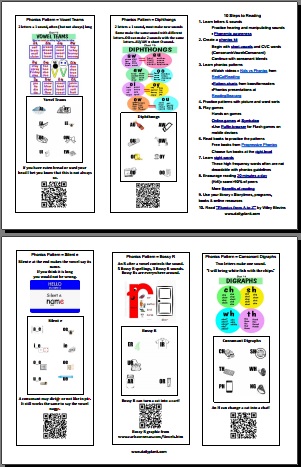
2 letters that work together, some vowels work as a team. 2 letters can work together, and the first one likes to speak. They might be long (except the diphthongs!), here are some you may have seen.
This part of the chart includes Tricky Y, which can sometimes be a vowel that makes the long I sound, and sometimes the long E sound. Once again, one sound can be represented in different ways.
When all of these phonics patterns are put together, the result is a one page vowel chart that represents many of the vowel sounds.
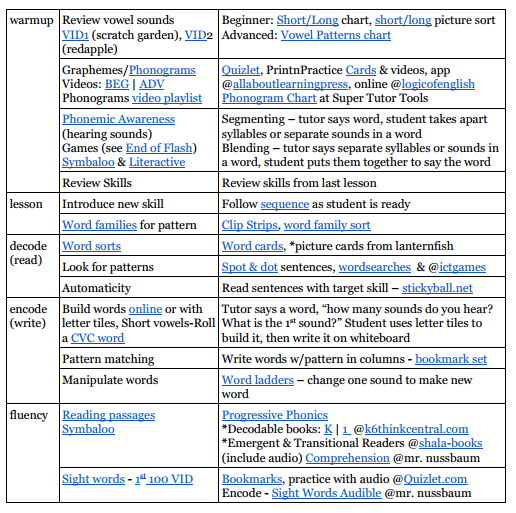
This plan to follow for tutoring students learning to read was inspired by Phonics Intervention from Sarah’s First Grade Snippets. The amount of time spent on different activities varies depending on the needs of the student. The assessments at the end of this post help know where to start. These activities can begin once letter names and sounds have been learned.
Build words with a magnetic whiteboard and letters, or online resources. UFLI has a printable word work mat and online blending board, or use virtual magnetic letters from room recess or big brown bear. More options at the Letter Tiles Pinterest Board. Say a word, then ask “how many sounds do you hear? What is the first sound? Etc.” The student uses letter tiles to build it, then writes it.
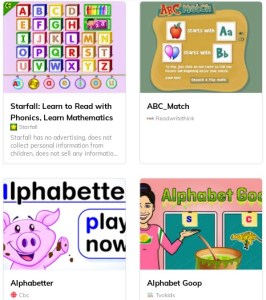
Learning to read isn’t an easy skill to master, and it takes time and practice. But sometimes practicing the skills needed for reading can be fun! Many websites provide free online games that make learning more fun. However, it is not always easy to find games that target a specific phonics skill. The games in … Continue reading “Fun Online Phonics Games”
Learning to read isn’t an easy skill to master, and it takes time and practice. But sometimes practicing the skills needed for reading can be fun! Many websites provide free online games that make learning more fun. However, it is not always easy to find games that target a specific phonics skill. The games in this post are targeted to practice the skills needed to understand the 44 sounds of the English language.
abcya.com – a teacher-created website that provides fun and educational games for kids. Pre-K through 5th grade, and includes games for learning letters (also numbers and more) It is free for use on pcs (ads) and can be obtained for mobile or tablet use with a subscription.
arcademics.com – arcademic skill builders are free online educational video games that offer a powerful approach to learning basic math, language arts, vocabulary and thinking skills. These are highly engaging and some are multi-player. Apps are available for both Android and iOS.
Funfonix.com – free online games (and worksheets) for phonics.
Galactic Phonics (Flash) – free resources created by teachers. It can be difficult to find games to practice diphthongs, this site has a good collection plus more. Find them all at Symbaloo.
Ictgames.com – free online games for phonics, mobile friendly
Kizphonics – an online phonics program which provides a few games on each level free, access beyond that requires a membership.
pbskids.org – a website from the Public Broadcasting System which is aimed at preschool kids.
phonics bloom – many games that work on pc and mobile devices, some free and more with subscription
readwithphonics.com – free for schools, libraries, & educational organizations with 10 or more students. Parents can pay for access, and there is an app available.
readwritethink.org – provides free materials including some games (Flash)
RoomRecess.com has lots of reading games. Many are available for both pc & mobile.
sadlier-oxford.com – an educational publisher of books and materials for grades PreK to 12+. Some games are available on pc only at SadlierConnect
Skillswise – provided by the British Broadcasting Corporation, this website includes a section of English Games. There is lots more about reading, writing, and math for higher levels.
softschools.com – provides many resources for free, including Phonics plus other resources. A premium subscription is available that removes ads and lets teachers set up student account to track progress.
splashlearn.com – tons of phonics games, free with sign-up, apps available.
starfall.com – provides some free content on phonics aimed at early grade levels, with expanded content available for a subscription. Starfall classic, free app is available.
Check out Wakelet collections of online games (and videos) by phonics topics at Pinterest.
There are also many hands on games!Wordplay Games includes both online and hands on games, and more hands-on games are at the ABCs of Games for Reading and at individual posts about phonics patterns by sequence.
Too many people struggle with learning to read. Low literacy levels often lead to limited opportunities for employment, according to literacy statistics at Phonics Facts. Make a difference by sharing the resources at Phonics Pow to help others teach reading.
Phonics guidelines can often be helpful, but there are some words that are not easily decodable. Learning and practicing sight words along with following a sensible sequence is helpful in learning to read.
Sight words are frequently found in written text, and many are not decodable with phonics guidelines. When these words are learned, a large percentage of written text can be read. E.W. Dolch identified 220 words and 95 nouns. In 1996, Dr. Fry expanded on the Dolch list and published “Fry 1000 Instant Words.” In his research, Dr. Fry found that:
• 25 words make up approximately 1/3 of all published text
• 100 words make up approximately ½
• 300 words are 65%
• The full list of 1000 words makes up 90% of all published text
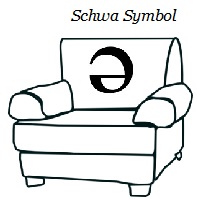
Schwa is a light vowel sound that can be made by any vowel. It is the most common sound in the English language. It is often very similar to a short u “uh”, but is softer and weaker. The symbol for schwa is an upside down e: ə.
• a: was, atlas
• e: camel, seven
• i: cabin, denim
• o: from, button
• u: focus, upon
In words with more than one syllable, one syllable is stressed or given more emphasis. Other syllables are unstressed, or unaccented. The schwa sound can occur in an unaccented syllable, so it is heard more often in words with more than one syllable.
One Syllable Schwa
Since the Schwa sound is more often found in words with more than one syllable, it is included at the end of the Phonics Pow Toolkit. (V.c) However, it is a good idea to introduce it earlier as Schwa can be found in some one syllable words like: a, was, the, from, does, and of.
Ā or /uh/? Either is okay! It was a/uh/ long way. It took ā long time. Thē or Th/uh/? Generally, if the word following begins with:
• Consonant sound – Thə/uh/ flowers bloomed.
• Vowel sound – It was thē end of the story. Practice Thē or Th/uh/ at Grammar Monster.
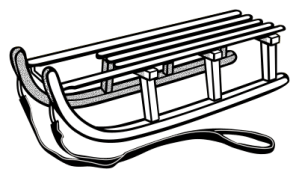
The sled was a lot of fun.
Hear the Schwa sound in these one syllable words with the letter o: My son won a ton of money a month from the lottery. At the end of the Silent e section (III.a) there are activities with words that have the Schwa sound (some love gloves).
Two Syllable Schwa
WATCH
Tigers and Robins and Camels, oh my! In two syllable words with one middle consonant, the first syllable can sometimes be open and long (as in tiger) or short (as in robin and camel). The second syllable of these words can often have the schwa sound.
ExtraAttention to A Schwa
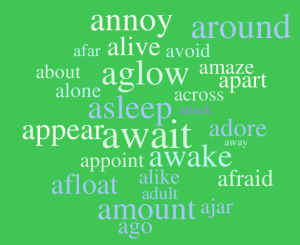
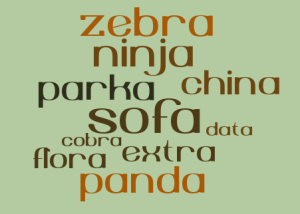
Any vowel can make the Schwa sound: zebra, open, pencil, lemon, and butter. But let’s give a little extraattention to the letter A, which can make the Schwa sound at the beginning (aware) and end (ninja) of some words. Play an online word search game with words where the letter a makes the Schwa sound at the beginning.
The letter a can make the Schwa sound at the end of some words like extra.
The letter a can also sometimes make the Schwa sound in the middle of words like: alphabet, amazon, elephant.
Practice words that have an A Schwa with a set of resources available at the Super Tutor Tools store at Teachers Pay Teachers that includes a handout, worksheet, and nice dice practice. There is also a free Schwa Word Treasure game. Try an online word sort.










 Be Aware – Notice Schwa:

 Phonics Pow