After learning about Consonant Digraphs with short vowels at the end of the SOUND OUT WORDS section (II.c), and about Silent e (III.a), it is time to learn about words that have BOTH! Words like…
CHASE THE SHEEP!
This free set of activities includes a worksheet, a word search, and a word sort. The words can be sorted two ways: by digraphs or by the Bossy R vowel. The CHASE THE SHEEP freebie is available to download at the Super Tutor Tools store at Teachers Pay Teachers. Also available is a free wordlist and set of bookmarks with consonant digraphs and vowel patterns.
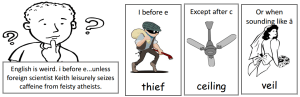
You may have heard this saying: i before e, except after c, and when sounding like a, as in neighbor and weigh. This is a guideline where there are quite a few exceptions: i before e, unless foreign scientist Keith leisurely seizes caffeine from feisty atheists.
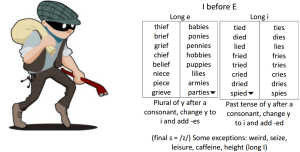
Generally speaking, i before e (as in thief and tried)
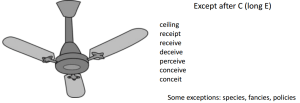
except after c (as in deceive)
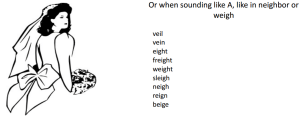
or when sounding like a, as in neighbor or weigh (and eight)
This is just one of the ways that vowels can vary. Practice with the I before E is Weird set of worksheets, available at the Super Tutor Tools store at Teachers Pay Teachers.
IGH is a trigraph – one sound is made with three letters. The gh is silent and the i is long. The sound of IGH is included with vowel teams in the Phonics Pow Toolkit, as the other vowels have teams that make the long sound, but i only has the trigraph IGH. Learn more about the vowel trigraphs AIR and EAR at Bossy R variations. WATCH videos on igh from Little Learners and Kids vs. Phonics, and try a long i wordsearch.
IGH is included in the Vowel Teams section of the Phonics Pow Toolkit. III.4
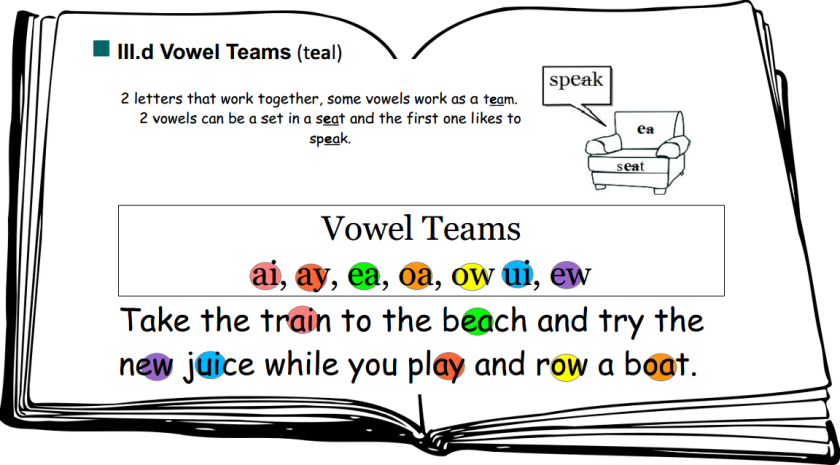
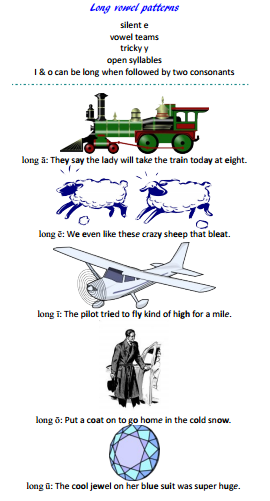
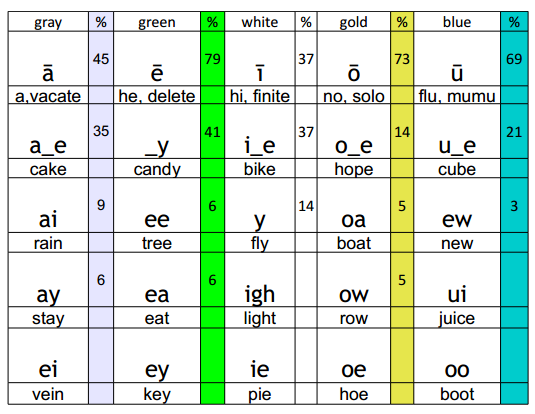
ā – ai & ay
ē – ea & ee
ī – igh
ō – oa & ow
ū – ui & ew
Can you identify all the long vowel patterns in the sentences below?
After learning about short vowels and consonant blends, learn about short vowel variations. II.c SOUND OUT WORDS – Short vowel variations.
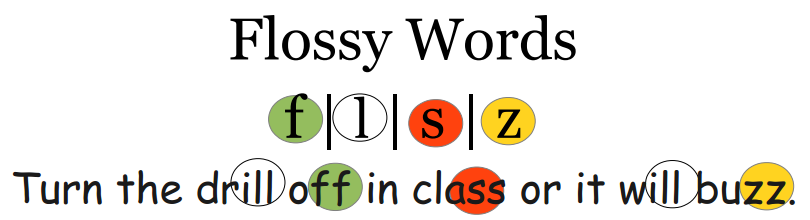
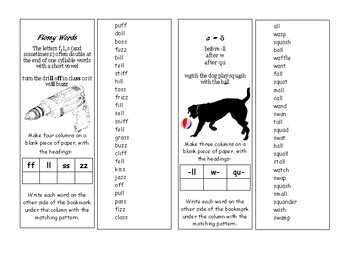
Flossy Words. The letters f, l, s (and sometimes z) often double at the end of one syllable words with a short vowel. Turn the drill off in class or it will buzz.
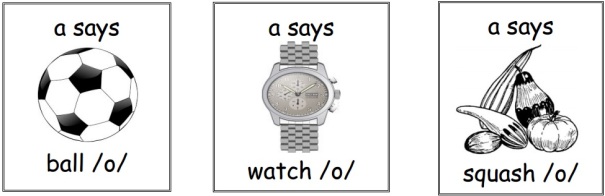
The letter a can say short o. The -all word family is special. In these flossy words the letter a makes a short ŏ sound. This can also happen after a w- or after qua-. Watch the dog play squash with the ball.
Closed syllables often have a short vowel, but sometimes not. The letters i and o can sometimes be long when followed by two consonants (but not always!) Fīnd and lĭft the lŏst gōld.
Some one syllable words make a schwa sound.Schwa is often a quick and light “uh” sound. Hear the schwa in these sight words: the sled was a lot of fun. And in these words with the letter o: My son won a ton of money a month from the lottery.
Some words with short vowels have consonant digraphs.Digraphs are two letters that make one sound, and these consonant letters together make a new sound.
Download bookmarks with pattern sorts for short vowel variations: flossy words, a can say o, ck endings, and short vowels with digraphs. Word sorts for these patterns are part of the Phonics Pow Toolkit.
The letter y is tricky indeed. It can make many sounds, more than three!
Yes, y is a consonant in yellow and yolk.
Sometimes y makes a short i sound like in system and gym.
A y at the end can a vowel be, with the sound of a long i or e. How do you know which you see? At the end of one syllable words, y often says “i” like in fly. With more syllables, it is often a long e.
There are some exceptions, like the one syllable word “key” with the long e sound. (Hey! No Way! -ey can sound like a long a in some words like grey, and the vowel team -ay a long a will say.) You can’t deny y is long i in two syllable words like: July, supply, reply, rely, and apply. Some two syllable words go in the long i pile like typist and style.
WATCH videos and PLAY online games about Tricky y at the Vowels That Vary Wakelet tutorial.
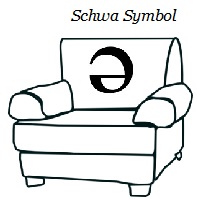
Schwa is a light vowel sound that can be made by any vowel. It is the most common sound in the English language. It is often very similar to a short u “uh”, but is softer and weaker. The symbol for schwa is an upside down e: ə.
• a: was, atlas
• e: camel, seven
• i: cabin, denim
• o: from, button
• u: focus, upon
In words with more than one syllable, one syllable is stressed or given more emphasis. Other syllables are unstressed, or unaccented. The schwa sound can occur in an unaccented syllable, so it is heard more often in words with more than one syllable.
One Syllable Schwa
Since the Schwa sound is more often found in words with more than one syllable, it is included at the end of the Phonics Pow Toolkit. (V.c) However, it is a good idea to introduce it earlier as Schwa can be found in some one syllable words like: a, was, the, from, does, and of.
Ā or /uh/? Either is okay! It was a/uh/ long way. It took ā long time. Thē or Th/uh/? Generally, if the word following begins with:
• Consonant sound – Thə/uh/ flowers bloomed.
• Vowel sound – It was thē end of the story. Practice Thē or Th/uh/ at Grammar Monster.
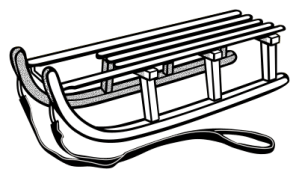
The sled was a lot of fun.
Hear the Schwa sound in these one syllable words with the letter o: My son won a ton of money a month from the lottery. At the end of the Silent e section (III.a) there are activities with words that have the Schwa sound (some love gloves).
Two Syllable Schwa
In words with more than one syllable, one of the syllables is stressed more, or has more emphasis. The schwa sound is often found in an unstressed syllable. Watch videos at the Schwa Wakelet to learn more about stress and schwa.
WATCH
Tigers and Robins and Camels, oh my! In two syllable words with one middle consonant, the first syllable can sometimes be open and long (as in tiger) or short (as in robin and camel). The second syllable of these words can often have the schwa sound.
ExtraAttention to A Schwa
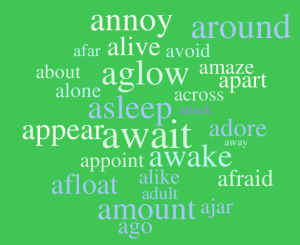
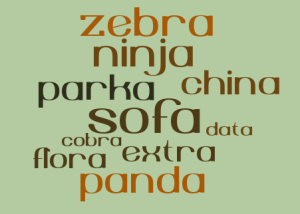
Any vowel can make the Schwa sound: zebra, open, pencil, lemon, and butter. But let’s give a little extraattention to the letter A, which can make the Schwa sound at the beginning (aware) and end (ninja) of some words. Play an online word search game with words where the letter a makes the Schwa sound at the beginning.
The letter a can make the Schwa sound at the end of some words like extra.
The letter a can also sometimes make the Schwa sound in the middle of words like: alphabet, amazon, elephant.
Practice words that have an A Schwa with a set of resources available at the Super Tutor Tools store at Teachers Pay Teachers that includes a handout, worksheet, and nice dice practice. There is also a free Schwa Word Treasure game. Try an online word sort.
Vowels can vary in the sounds they make. Here are some of the ways that Bossy R words can vary. First let’s look at what happens when words have both a Silent e and a Bossy R.
Silent e vs Bossy R
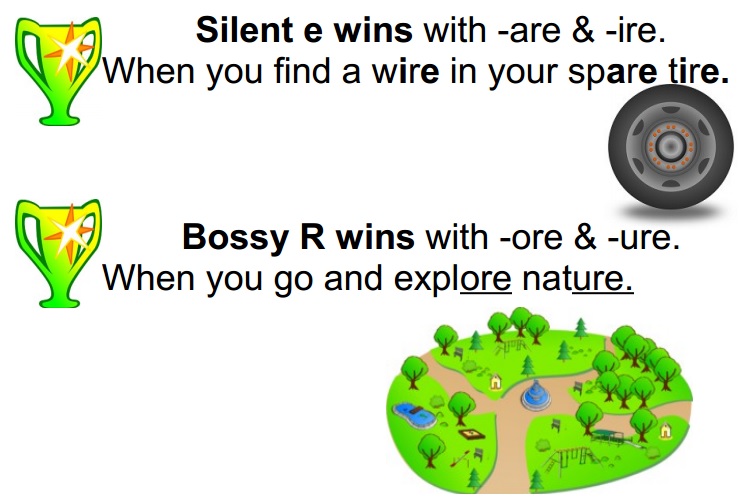
If you find a wire in your spare tire you will see that Silent e wins with -are & -ire. When we explore nature, it is Bossy R that wins with -ore & -ure. Try an online word sort with Silent e vs. Bossy R. A Silent e vs Bossy R words worksheet is available at my Teachers Pay Teachers Super Tutor Tools store.
The Bossy R Schwa
Some words say “er” with different Bossy R spellings. “The pearl is worth a dollar.” In this phrase, all of these spellings make the “er” schwa sound. Try an online Bossy R Schwa word sort.
The -ear phonogram is quite tricky. You will learn (er) not to fear (long e/r) the bear (“air”) with a big heart (ar). WATCH: trigraphs song from english4abc and the ear video from stickyball.net.
The -air sound (or phoneme) can be made with several spellings. Besides the ear in bear, AR can say arrow and ER can say error. Be warned that AR can also say OR when it is warm. IR can say a long e in words like spirit & mirror.
See a slideshow or watch a video of these different sounds.
Multiple Meaning Words
When working with Bossy R variations, you may notice that many of these words can be homophones. They sound exactly the same, but are spelled differently and have different meanings. “I have a pair of pears.”
You may also see homonyms or homographs, words that are spelled and sound the same but have different meanings. “I will park the car at the park.” In the phrase “There is a tear in my eye as I tear up the paper” the word tear is a hetronym. Hetronyms are a type of homograph that have the same spelling, but a different sound and meaning. Syllable stress makes a difference, a the schwa sound is often found in unstressed syllables. See a list of words with more than one stress pattern from Reading Universe.
READ “A Bat Cannot Bat, a Stair cannot Stare” by Brian P Cleary, “Dear Deer” by Gene Barretta, “Eight Ate” and “The Dove Dove” by Marvin Terban.
Practice Schwa Bossy R with worksheets that can also be used as word sorts available at the Super Tutor Tools store at Teachers Pay Teachers. A free copy of the Multiple Meaning Chart can be found there as well. PLAY a homophone Search-a-word puzzle.
Vowels can be long with the Silent e pattern, Vowel Teams, Open Syllables, and Tricky Y. See Long Vowel Patterns. Two more important long vowel patterns to learn are: i and o can be long when followed by two consonants, and open syllables in two syllable words with one middle consonant. These can be challenging, because in both cases, words may have either the long or short sound.
The first syllable in two syllable words with one middle consonant can be either long or short, so it is important to understand and practice these words too. Since more are long (60%) than short (40%), try the long vowel sound first to see if it is a recognizable word. If it is not, try it with the short vowel sound.
One of the trickiest things about the English language is that vowels may sometimes look the same and make different sounds. There are even variations with short vowels. (II.b)
Y at the end of a one syllable word, often says a long “I” as in fly. Learn more about Tricky Y.
We have met OO/OO, one of the diphthongs. Which might be a foot that is short, or a boot that is too long. How about OU, which can be very rough? More than six sounds can really be tough. i before e is weird too and can vary a lot. i before e, unless foreign scientist Keith leisurely seizes caffeine from feisty atheists.
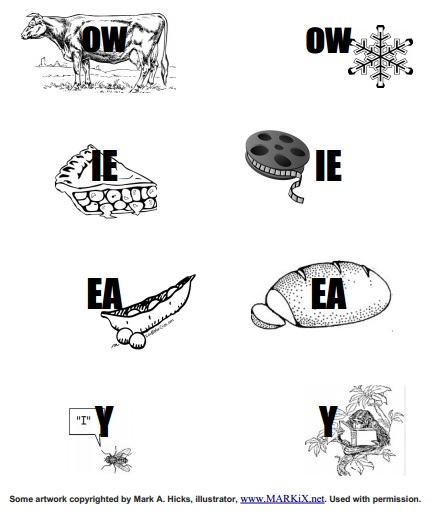
More vowels that can vary are OW, EA, IE. When you eat (ē) bread (ĕ ) with a steak (ā) , EA can also say a long a, isn’t that great?
R controlled vowels can vary a lot: AR can sound like ER, as in pillar or dollar. So can OR, when you start your motor. When there is an E before AR all bets are off. It might be ER when you learn, or maybe a long e that you hear. It can even be a polar bear on a chair. Learn more about the Bossy R Schwa sound and other variations.
Last, but not least of all, is the amazing schwa. Any vowel can make this lazy (often) “uh” sound, so watch out for schwas all around!
Two letters that work together, some vowels work as a team. Two vowels can be a set in a seat and the first one likes to speak.
Digraphs are two letters that work together to make one sound. Vowel Digraphs can make new sounds like the Diphthongs. After learning Diphthongs, the remaining Vowel Teams are often long, making the sound of the 1st vowel & the 2nd vowel is silent. This guideline is sometimes not reliable, however. There can be many exceptions. EA often makes the long E sound (eat), but sometimes a short E (bread) or long A (steak). IE often makes the long I sound, but sometimes a long E sound (pie or thief).
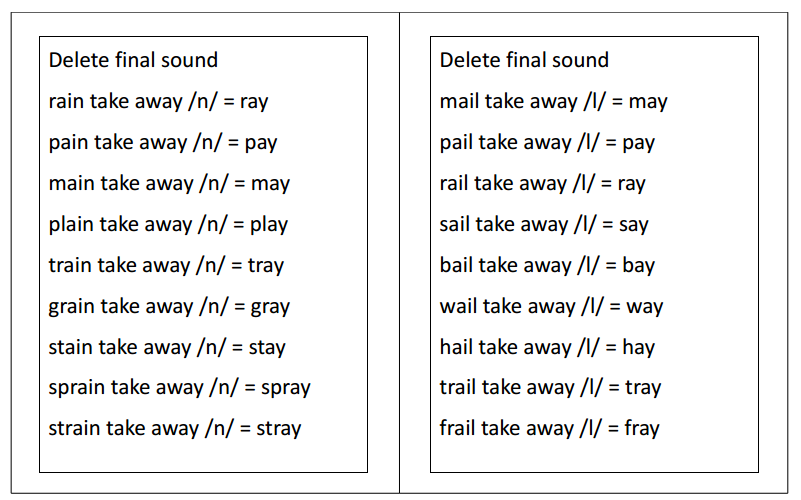
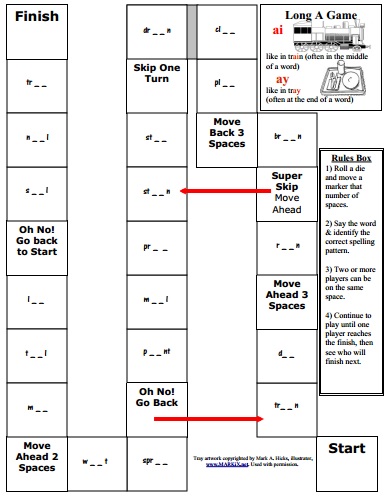
AY is often used at the end of a word or syllable, AI at the beginning or middle of a word or syllable. Practice this with the phonemic awareness activity above, an online word sort, and a wordsearch.
 CHASE THE SHEEP!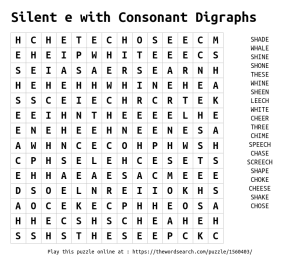








 Learn about more ways that


 Be Aware – Notice Schwa: