The consonant digraph TH can make a voiced or unvoiced sound. Notice TH in this sentence: whip the filling in a dish withthis whisk. Voiced sounds are made with vibration that can be felt in the throat. Unvoiced sounds are made with a push of air, and there is no vibration. Which of these words do you think have a voiced th?
Syllables are a unit of speech generally containing only one vowel sound. Learning the different types of syllables and the vowel sounds they make is an important skill for decoding – translating letters into words. Hearing syllables in words is also a part of phonological awareness, an essential skill for reading.
There are six syllable types, seven if the vowel digraphs (two letters that make one sound) are separated into Diphthongs that make new sounds, and Vowel Teams that often make a long vowel sound. In the sequence followed by the Phonics Pow Toolkit, syllable types are learned in this order.
Closed [VC] a vowel closed in by at least one consonant is often short.
These may be [CVC] words, or words with consonant blends at the beginning or end.
• cat
• bed
• dig
• dog
• rug
Open [CV] When no consonant follows a vowel, the vowel is often long and says it’s name.
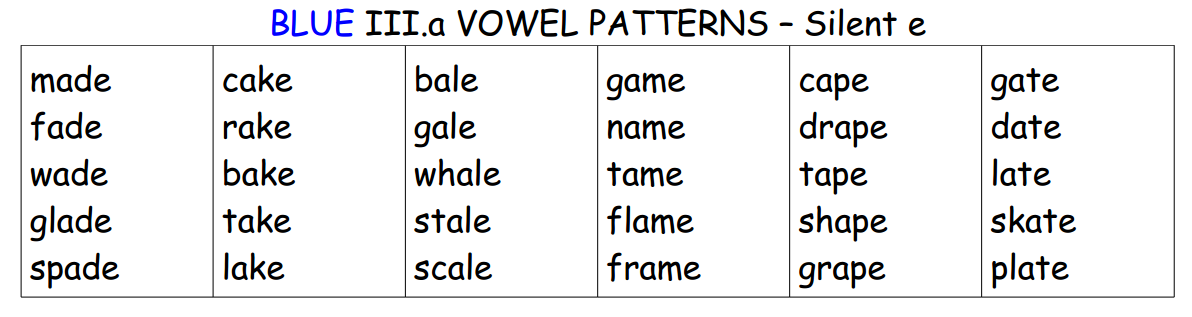
When teaching reading, it is important to have access to lists of words for a phonics pattern. Wordbase from Mrs. Learning Bee is great for making word lists, and Literacy Learn is another resource. The word lists from On Track Reading are also helpful, and there is another list for phonemic awareness.
Now there are now two word lists available here at Phonics Pow.
The next one includes all the words in the Word Sort Games that are designed to go along with the Phonics Pow Toolkit. Download the Word Sort Games Word Lists pdf. Word sorts are a tool for teaching reading skills that have been shown to be effective way for students to learn patterns in words. Find lots of links to online word sorts at Word Sort Games.
Both of these word lists help to introduce phonics patterns in a sequence during a reading tutor session.
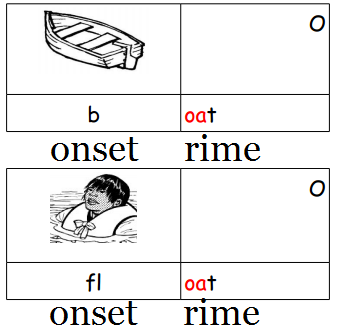
Words that have the same ending pattern (rime) often rhyme with the same ending sound. They are sometimes called word families. They are a great way to introduce a pattern that you are learning as part of a reading lesson.
Blending Onset & Rime together is a part of phonemic awareness, an important skill for learning to read.
Onset – the part of the word before the vowel
Rime – the part of the word with the vowel and what follows it
(Rime & Rhyme are homophones, words that sound the same but are spelled differently and can have different meanings.)
Some options for free printable word family sliders can be found at my Pinterest board on Word Families and Ladders. I especially like the ones from Little Bunny because there are lots of phonograms. They have cute illustrations and are in black and white so they don’t use a lot of color ink to print. But since compact resources are essential for a portable tutor kit, I created a very plain and simple set of clip strips for this purpose.
Print and Assemble:
After the introduction, the next few pages are an index. The phonics pattern is printed on the left. These are word endings, or rimes. Print the index pages on regular paper & cut across by patterns to use them as labels on long envelopes for storing the strips.
Print the remaining sets of strips on card stock.
Cut the bottom strip off across. These are word endings, or rimes, that will be cut apart to attach to the back of matching strips in step 5.
Cut remaining strips apart horizontally (down). Leaving the top margin and a small right side margin on is helpful.
Cut apart each ending (rime) from the bottom strip (or a 1″ circle punch works) and attach to the back of the matching strip with velcro dots. Store the strips in labeled envelopes.
Use:
Select a strip with onsets, and attach the ending (rime) with a velcro dot to a clothespin.
Move the clothespin down the strip, with student blending the sounds into words.
The Clip Strips freebie is available at the Super Tutor Tools store at Teachers Pay Teachers. Visit Word Lists for a free download of the words.
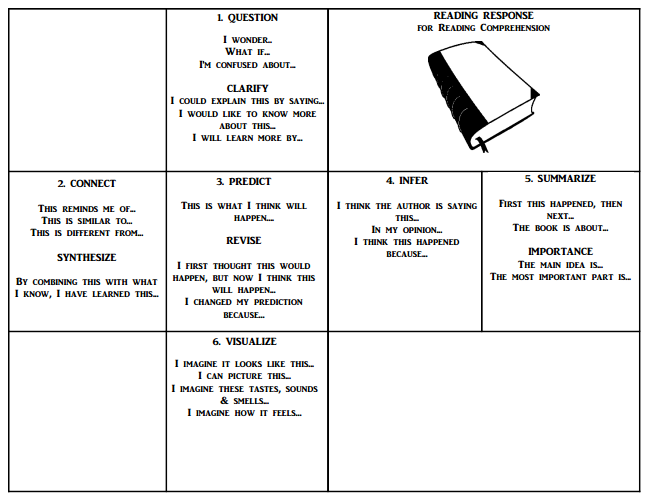
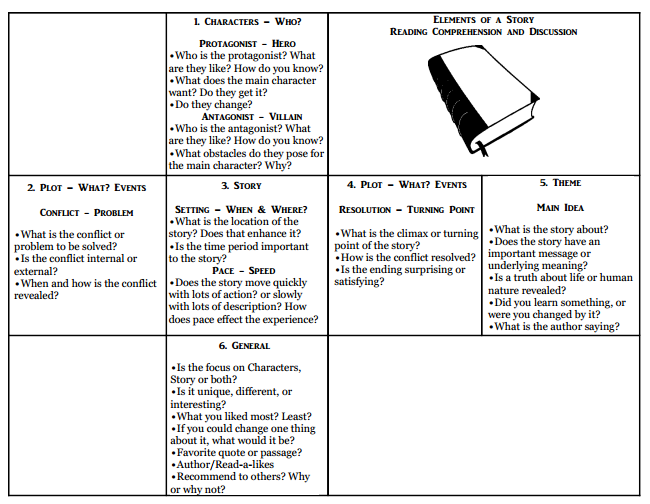
Get a free copy of cubes for reading comprehension at the Super Tutor Tools store at Teachers Pay Teachers. One includes strategies for reading comprehension, the other has the elements of a story.
Elements of a story
Find websites with passages to check reading comprehension at READ, just read.
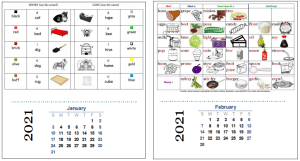
Unlock the power of teaching reading in 2021 with a free printable CD Calendar! Keep handy information with charts from Phonics Pow at your fingertips. Here’s how to make a stand from a CD case.
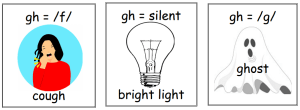
The sound of /f/ can be spelled different ways. This is one of the ways that consonants can vary. The sound of /f/ can be spelled many ways indeed, more than three! In the following sentence, how many ways do you see?
The dolphin swam fast in the rough sea by the cliff
(f as in fast, ff as in cliff, ph as in dolphin, and gh as in rough.) The word fall belongs to the special flossy word family -all, where the letter a makes the sound of a short o before double letters -ll. In the word phonics, the ph makes the sound of /f/.
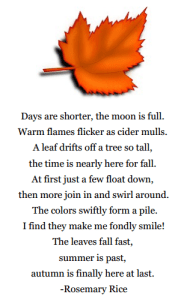
How many times do you hear the sound of /f/ in this poem about fall?
The Fall for Phonics freebie that includes the poem, a word list, and worksheet for F variations is available at the Super Tutor Tools store at Teachers Pay Teachers.
After learning about Consonant Digraphs with short vowels at the end of the SOUND OUT WORDS section (II.c), and about Silent e (III.a), it is time to learn about words that have BOTH! Words like…
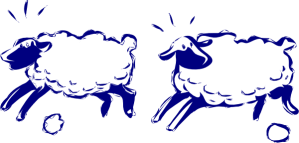
CHASE THE SHEEP!
This free set of activities includes a worksheet, a word search, and a word sort. The words can be sorted two ways: by digraphs or by the Bossy R vowel. The CHASE THE SHEEP freebie is available to download at the Super Tutor Tools store at Teachers Pay Teachers. Also available is a free wordlist and set of bookmarks with consonant digraphs and vowel patterns.
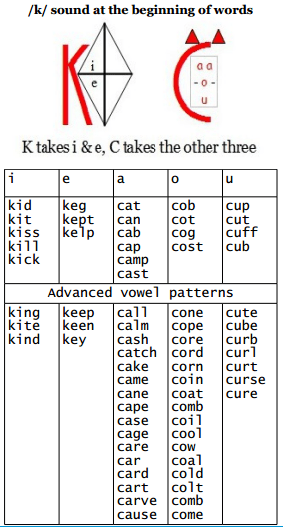
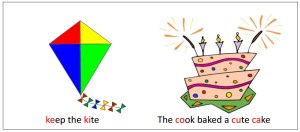
The /k/ sound at the beginning of words can be spelled with a c or a k. This is one of the consonants that can vary. This can be introduced with words that have a short vowel, adding more advanced vowel patterns as they are learned.
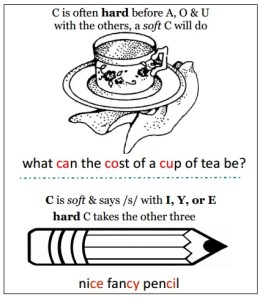
K takes i and e, and C takes the other three.
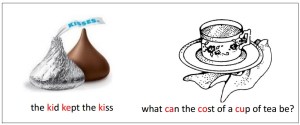
Some words with short vowels can begin with the /k/ sound. The kid kept the kiss. What can the cost of a cup of tea be?
Some words with more advanced vowel patterns can begin with the /k/ sound. Keep the kite. The cook baked a cute cake.
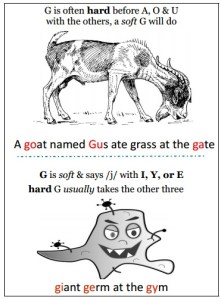
G is often hard before A, O & U. With the others, a soft G will often do.
(But this is not always true, which you know if you get a gift given to you!)
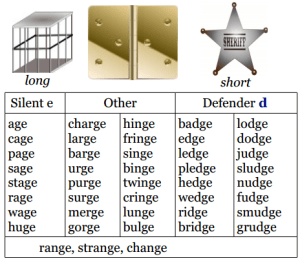
G before e will often soft be. Words that end in -ge or -dge have the soft G sound of /j/. Defender d can stop the vowel from being long in some Silent e words.
Sight words with:
Hard c /k/: can, came, car, cut
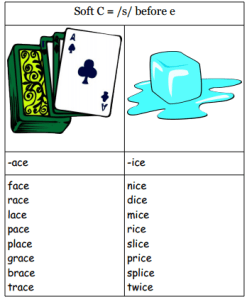
Soft c /s/: face, place, space, sentence
Hard g: go, got, big, give
Soft g /j/: large, page, change
Keyword sentence: I got a large change when I came to this place.
There are some words with short vowels that have a hard or soft c and g, but many more have advanced vowel patterns. Because of this, hard or soft c and g (IV.b) are introduced after learning about Defender d at the end of the Silent e section in the Phonics Pow Toolkit. (III.a) Download worksheets or the free anchor charts with word lists for hard or soft c and g at the Super Tutor Tools store at Teachers Pay Teachers. The Consonant Variations soccer sort game includes hard or soft c and g, plus the ending sound of /k/.
WATCH videos and PLAY games about hard or soft C and G at the Wakelet tutorial on hard or soft C and G.
Learn how to get the free word sort games that include hard or soft c and g. Game boards for hard or soft c and g are part of the Phonics Pow Toolkit.





 CH
CH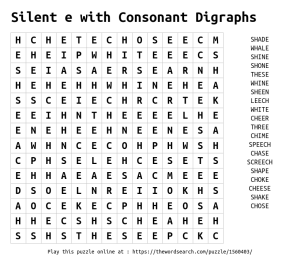


 Phonics Pow