Mr. Nussbaum

This Phonics Focus is about the website mrnussbaum.com, a Phonics Fav with many free helpful tools and games. More resources can be obtained with a subscription. While there are resources for many subject areas, the language arts category is of most interest for learning to read. Mr. Nussbaum makes great use of audio. In the video, we highlight:

Literacy Tools

Games (most are now for premium subscribers)

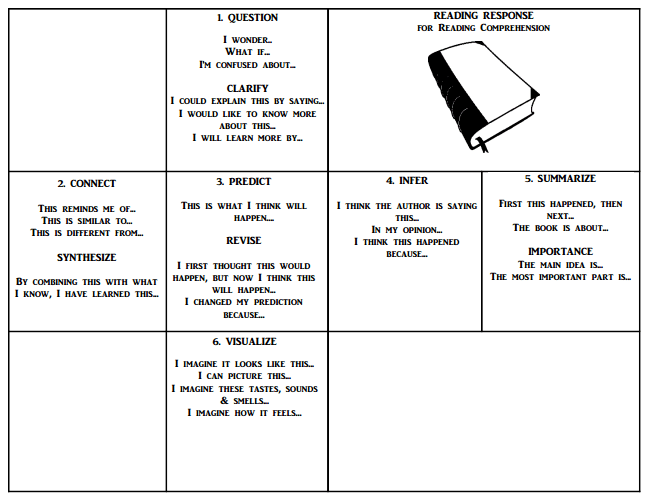
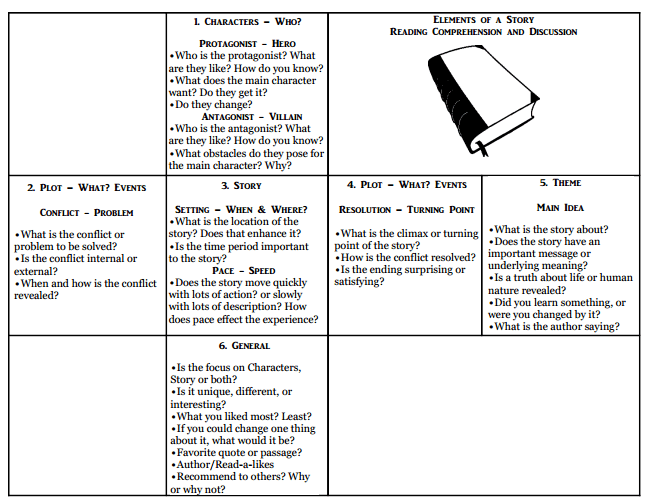
Reading Comprehension Cubes

Reading Strategies for Comprehension

Get a free copy of cubes for reading comprehension at the Super Tutor Tools store at Teachers Pay Teachers. One includes strategies for reading comprehension, the other has the elements of a story.

Elements of a story

Find websites with passages to check reading comprehension at READ, just read.

See Recipes for Reading Comprehension Strategies at the Balanced Literacy Diet.

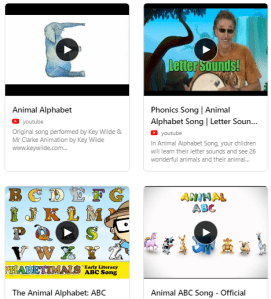
Animal Alphabet

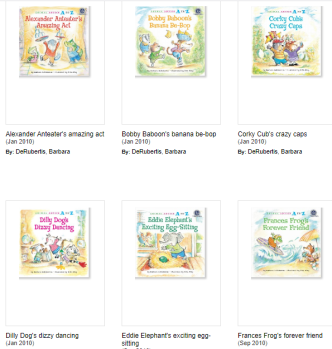
The Animal Antics A to Z series by Barbara DeRubertis includes a book with each letter for teaching the alphabet. Each title is an example of alliteration, with the repetition of the same or similar consonant sounds in words that are close to one another. Rhyme and alliteration help to develop phonological awareness skills. Sorting animal flashcards from supersimple by syllables is another way to practice phonological awareness.

Animal antics A to Z by Barbara DeRubertis

1.Alexander Anteater’s amazing act (Jan 2010)
2.Bobby Baboon’s banana be-bop (Jan 2010)
3.Corky Cub’s crazy caps (Jan 2010)
4.Dilly Dog’s dizzy dancing (Jan 2010)
5.Eddie Elephant’s exciting egg-sitting (Sep 2010)
6.Frances Frog’s forever friend (Sep 2010)
7.Gertie Gorilla’s glorious gift (Sep 2010)
8.Hanna Hippo’s horrible hiccups (Sep 2010)
9.Izzy Impala’s imaginary illnesses (Sep 2010)
10.Jeremy Jackrabbit’s jumping journey (Sep 2010)
11.Kylie Kangaroo’s karate kickers (Jan 2011)
12.Lana Llama’s little lamb (Jan 2011)
13.Maxwell Moose’s mountain monster (Jan 2011)
14.Nina Nandu’s nervous noggin (Jan 2011)
15.Oliver Otter’s own office (Jan 2011)
16.Polly Porcupine’s painting prizes (Jan 2011)
17.Quentin Quokka’s quick questions (Jan 2011)
18.Rosie Raccoon’s rock and roll raft (Jan 2011)
19.Sammy Skunk’s super sniffer (Sep 2011)
20.Tessa Tiger’s temper tantrums (Sep 2011)
21.Umma Ungka’s unusual umbrella (Sep 2011)
22.Victor Vicuna’s volcano vacation (Sep 2011)
23.Walter Warthog’s wonderful wagon (Sep 2011)
24.Xavier Ox’s xylophone experiment (Sep 2011)
25.Yoko Yak’s yakety yakking (Sep 2011)
26.Zachary Zebra’s zippity zooming (Sep 2011)

Find the book series listed at Goodreads, and download a printable list here:  Animal Antics A to Z series by Barbara DeRubertis. Watch Letter K read aloud!

more animal alphabet books:

  • ABC Animal Jamboree by Andreae, Giles
  • ABC Animal Riddles by Susan Joyce
  • Alphabet by Alex Lluch
  • Animalia by Graeme Base
  • 8, An Animal Alphabet by Elisha Cooper
  • Animal ABC by Marcus Pfister
  • Search and find alphabet of alphabets by Allan Sanders
  • Bembo’s Zoo by Roberto De Vicq de Cumptich

The Animal Alphabet Wakelet has links to videos and printables for learning the alphabet with animals! Find games and more resources at Learn the Alphabet.

The End of Flash

The end of 2020 also means the end of Flash. Many online games that are great to practice phonics skills use Flash, but Adobe will no longer support Flash after December 30, 2020.

Some websites have made games that are more mobile friendly without Flash, notably: ict games, kizphonics, mr. nussbaum, and room recess. Some of these games can be found at the mobile friendly symbaloo.

A work-around found through an article from How To Geek that led me to Ruffle, has been working for me on my laptop. Ruffle has made it easy to add an extension to Chrome.

The work-around above may be helpful to use games with Flash at some websites like Clever Learner, Galactic Phonics, and more found at the Symbaloo collections. Professor Garfield and Literactive were both excellent for phonemic awareness, but seen to be no longer available.

Author Kevin Bolger

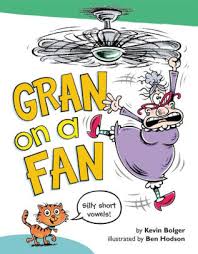
Books that are funny are especially popular with kids, which is why “Gran on a Fan: silly short vowels” by Kevin Bolger is a great choice for beginning readers. The author does a great job of creating fun stories while staying within the limitation of using words with short vowels. The illustrations by Ben Hodson are wonderful.

The author has other books for readers as they progress: “Lazy Bear, Crazy Bear” has a focus on long vowels. Two books with sight words are “See Fred Run” and “Fun With Ed and Fred.” Check out his website at www.kevinbolger.com.

Some Love Gloves

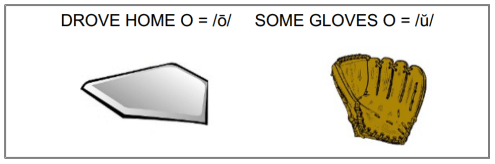
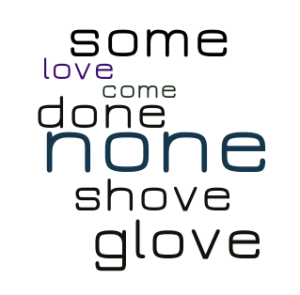
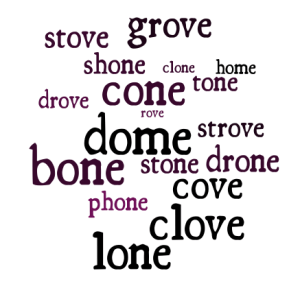
Some one syllable words with the letter o and a silent e at the end make the long o sound, like drove and home. Others that you might expect to have a long vowel sound do not. Instead, they make the “uh” schwa sound, which sounds very similar to short u. Some, love, and glove are a few of these. Practice these words after learning about Silent e (III.a).

Notice that this often happens when the letter o comes before the letters m, n, & v. Of course, some words DO follow the Silent e guideline and have the long o sound.

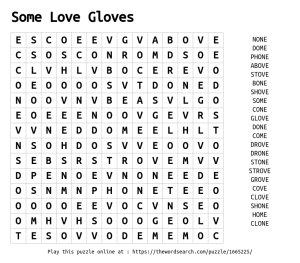
Play an online wordsearch game with these words.

The Some Love Gloves set that includes a worksheet and boardgame is available at the Super Tutor Tools store at Teachers Pay Teachers.

Learn more about the Phonics Pow Toolkit, how to get free word sort games and more free resources.

Word Play Games

Playing with words is a great way to practice skills for reading. This list has some ideas for hands on games to play.

Find more hands-on games at ABCs of games for reading.

Find links to Fun Online Phonics Games,  Wakelet collections of games (and videos) at Pinterest, (including word games), and  online games at Symbaloo.

Catch the Pitch: spelling the final /ch/ sound

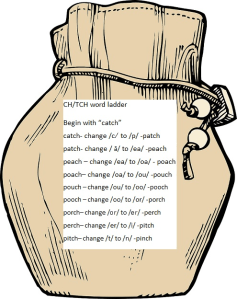
Catch a pitch or scratch an itch, the tch is not a glitch! Pinch an inch or catch a pitch, how to know which is which? The /ch/ consonant digraph sound is often spelled -tch immediately after a short vowel in one syllable words. As you might expect, there are some exceptions: such, much, rich, and which.

Eat a peach for lunch on a bench and you may have a hunch: after a consonant or vowel combinations it changes a bunch.

bench

The /ch/ sound is NOT spelled -tch when it comes after a consonant, as in branch, clinch, munch or stench.

wrench artwork copyrighted by Mark A. Hicks, illustrator, http://www.MARKiX.net.

It is just ch with mulch or a wrench, also with a bossy r on a porch.

beach

The /ch/ sound is NOT spelled -tch when it comes after diphthongs and vowel teams: pouch, pooch, coach, or reach. If you sit on a couch or lay on a beach, the ch spelling will be found in each.

Now -ch or -tch spelling will be a cinch to teach!

pouch

This guideline is learned after learning about consonant digraphs (IV.a)

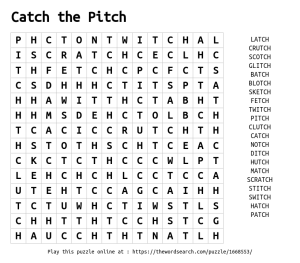
Play an online wordsearch with words that end in -tch.

Practice words with a set of free word sort games for the Phonics Pow Toolkit that include -ch or -tch words. The Catch the Pitch set includes a word list, worksheet, and a board game. Find it at the Super Tutor Tools store at Teachers Pay Teachers.

Voiced and Unvoiced Consonants

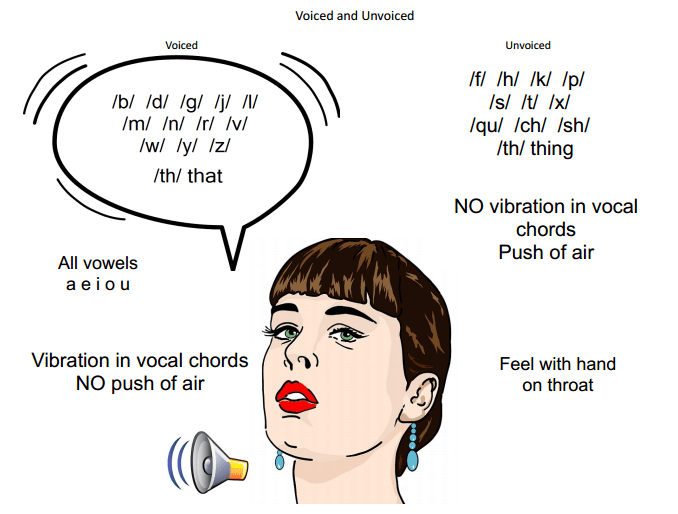
Some consonants are voiced; they are formed with vibration in the vocal chords, and no push of air. Voiced consonants are: /b/ /d/ /g/ /j/ /l/ /m/ /n/ /r/ /v/ /w/ /y/ and /z/. All vowels are voiced too.

Some consonants are unvoiced; they make no vibration in the vocal chords, but there is a push of air. Unvoiced consonants are: /f/ /h/ /k/ /p/ /s/ /t/ /x/ /qu/ and digraphs /ch/ /sh/. The digraph /th/ can be voiced as in “that” or unvoiced as in “thing.”

Some word pairs compare voiced and unvoiced consonants (at the beginning) that are made with the same mouth placement of tongue, lips, and teeth. Try putting a hand on the throat to feel the difference while saying these words: bat/pat, dip/tip, gab/cab, van/fan, zip/sip, and jug/chug.

Also try these that are not made with the same mouth placement, but one word begins with a voiced consonant and the other is unvoiced: jog/hog, lit/kit, mat/hat, nut/hut, and rat/pat.

Learn more about Voiced and Voiceless Sounds at Literacy Learn.

It is easier to learn consonants that are voiced, but understanding the difference becomes especially important in the following two instances.
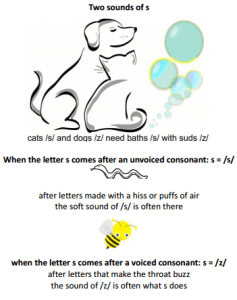
The letter s can make different sounds, depending on whether it follows a voiced or unvoiced consonant. After an unvoiced consonant, often s = /s/. After a voiced consonant, often s = /z/.
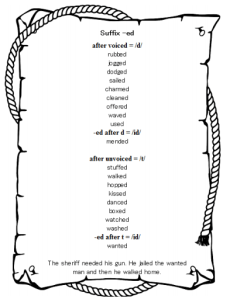
The suffix -ed can make different sounds, depending on whether it follows a voiced or unvoiced consonant. After a voiced consonant, it often makes the sound of /d/ as in “jailed.” After an unvoiced consonant, it often makes the sound of /t/ as in “walked.” A third sound, /id/ is made after the voiced consonant d as in “needed” and the unvoiced consonant t as in “wanted.”

Can you hear the three different sounds made by the suffix -ed in the following sentence?

The sheriff needed his gun. He jailed the wanted man and then he walked home.
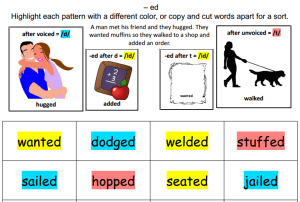
A set of resources for with handouts and worksheets for voiced and unvoiced consonants is available at the Super Tutor Tools store at Teachers Pay Teachers.

Learn more about the Phonics Pow Toolkit, how to get free word sort games and more free resources.