Silent letters are one of the ways that English is weird. Silent e is one way we learn to make vowels long, and Consonant-le words also end with a silent e.
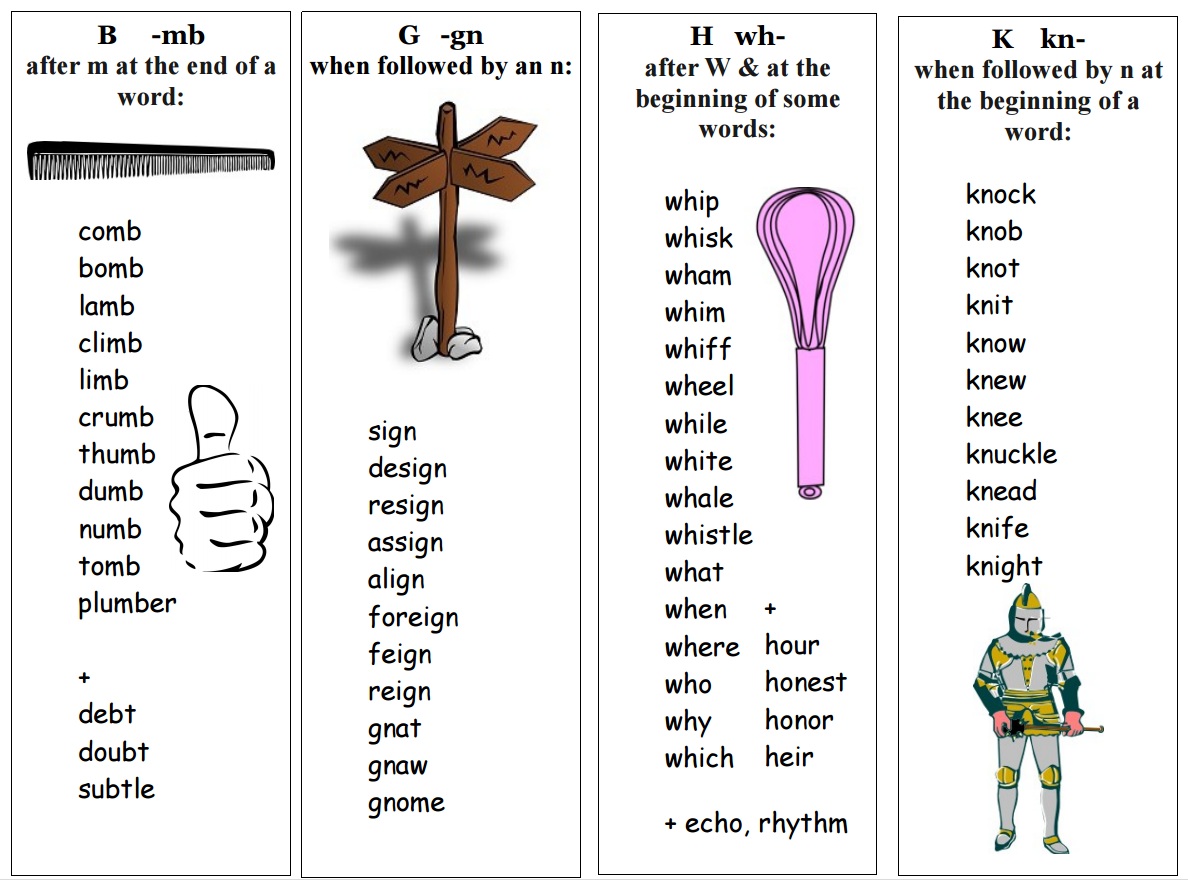
- B -mb: b is often silent after m at the end of a word, like in comb.
- G -gn: g is often silent when followed by an n, like in sign.
- H wh-: h can be silent after w and at the beginning of some words, like whisk and hour.
- K kn-: k is often silent when followed by n at the beginning of a word, like in knot.
When -igh makes the long i sound like in right, the gh is silent. (gh can make other sounds too)
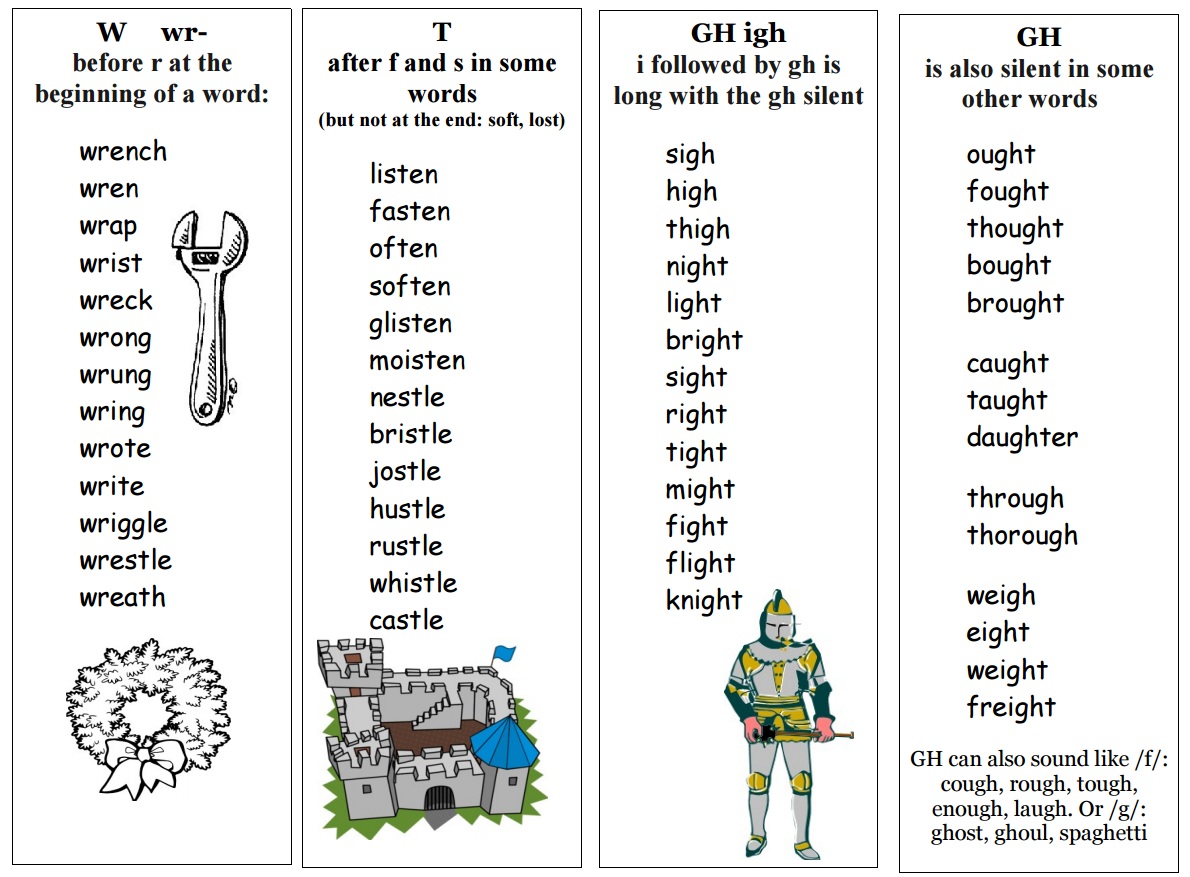
- W wr-: w is often silent before r at the beginning of a word, like in wrench.
- T -ft, -st: t can be silent after f and s in some words, like in listen, often, and castle.
- GH can be silent when it follows i and makes the i long like in light. It can also be silent in words that make other sounds like taught, thought, through, and eight.
Some words with silent letters are homophones that sound the same but have different spellings and meanings, like where/wear, hour/our, know/no, knew/new, through/threw, knead/need, and weigh/way.
RESOURCES: Try a worksheet at liveworksheets. A quiz and wordsearch at https://howtospell.co.uk/silent-letters. An online wordsort at Wordwall. Examples with audio at Espresso English. Highlight the silent letter activity at BBC Bitewise.


